
Avoiding Electrostatic Discharge on the Manufacturing Floor
Synopsis
Details
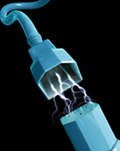
The correct choice of anti-static production torque tools can help control the "invisible menace" that haunts the manufacturing process
Do you believe in ghosts? If you are a manufacturing engineer, or find yourself involved anywhere within the production environment for microelectronics products, you should at least believe in the invisible reality of Electrostatic Discharge (ESD). For nothing can harm a product more than the specter of catastrophic or latent failure caused by an ESD mishap on the manufacturing floor.
Despite recent electronic engineering triumphs in creating faster, smaller, more intelligent and less power-consuming electronic devices, simple ESD still lurks as a constant danger. Given today's operating voltages of as little as 1.5 Volts and chip-set traces measuring only 400 angstroms in width, the risk of ESD damage is greater than ever. Any lapses in preventing its occurrence can affect production yields, manufacturing costs, product quality, product reliability, reputation and profitability. Industry experts have estimated average product losses due to ESD to range from 8-33%.
Many manufacturing and quality-management engineers already take some preventative measures - such as the use of wrist straps and heel straps - to exorcise ESD from their work-in-progress. But what about those gremlins that hide within the production tool themselves? If your tools lack proper grounding, then you still put your product at risk.
A quick review of the fundamentals of static electricity, as they apply to the manufacturing environment, can therefore help elucidate the significance of ensuring that all production tools are built with ESD attenuation in mind.
Electrostatic principals
The most common way to create an electrostatic charge is through triboelectric charging, which involves the mechanical contact and separation of two dissimilar materials. As an example, the process of sliding a plastic-encased electronic screwdriver across a metallic work surface can generate a significant electrostatic charge.
On an atomic level, when there is any difference in electrostatic potential between two objects, a transfer of electrons takes place between these charged materials so that their potentials can become balanced. This exchange of energy constitutes the electrostatic discharge, and it takes place within micro- to nano-second intervals.
The actual discharging of these potentials to a sensitive component or device takes place under two basic models. The most common cause of damage usually occurs through the direct transfer of electrostatic charge from the human body to the ESD-sensitive device. Referred to as the Human Body Model, most preventative measures - such as the wearing of wrist straps - focus on this channel of transference.
Yet, equally damaging discharges can occur from a charged conductive object, such as a metallic tool. As an example, a worker may be totally grounded, but if he or she brings a sensitive component or circuit card in contact with an ungrounded electric screwdriver, then ESD damage can still occur. The model used to characterize such an event is known as the Machine Model. Here is where many manufacturing engineers are unknowingly exposing their products to the effects of ESD. Charges build up on most bench tools, and unless they are dissipated or prevented, damage to the components can result.
As an example, many drivers are built with a plastic housing. Insulators, such as plastics, inherently include measurable conductance and can build and store large electrical charges. On the other hand, most enclosures or cabinets are made of highly conductive metal materials. When an insufficiently grounded driver comes into contact with a conductor, a static electrical charge bleeds off virtually instantaneously at extremely high voltage.
The effects/damages wrought by ESD
Even at ESD voltages of below 200V, gate oxide destruction can occur in a semiconductor, completely changing its electrical characteristics. Low ESD voltages can also result in junction failure where the bonding wire attaches to the leads within the package of micro-components. Because these levels of electrostatic discharge hover well below what humans can normally feel - which are approximately 3,000 to 4,000 Volts - most electrostatic discharges pass unnoticed by assemblers. Especially when utilizing an electric screwdriver, the assembler switches it on and only hears the whir of the motor. Any noises caused, as the static charge arcs through the air cannot be heard. Yet, the damage is done in an instant, and it takes the shape of two forms.
Like the devil we know, catastrophic failure renders the component or circuit card instantly defective. Basic quality/performance tests detect these failures long before product shipment. Under such cases, a swapping out of the damaged part or card can immediately rectify the problem.
More pernicious over the long run, though, is latent failure. A device that is exposed to an ESD event may be partially degraded, yet continue to perform its intended function throughout the testing process. However, once the device gets shipped to the customer and placed in the field, the operating life may end up drastically shortened. Such product-recall scenarios damage OEM/vender confidence, and ultimately threaten the operating life of the organization.
Since latent defects are extremely difficult to detect - short of part examination under an electron microscope - excruciating attention to prevention stands as the most effective weapon of defense.
How the right tools can cloak you against harm
Today's manufacturing engineers possess a vast arsenal of products to act as talismans to ward off the evil caused by ESD. Most of these measures - such as wrist or heel straps, shoe covers, and conductive mats - only focus on the human model. Yet, all preventative measures imposed on staff and the facility is for naught if the tools used in assembly lack the necessary grounding.
Since the Machine Model recognizes that ungrounded assembly tools pose just as great an ESD risk as ungrounded personnel, then it behooves every manufacturing and quality engineer to ensure that only properly grounded tools are introduced into the production environment.
Some of the most common offenders are electric screw/nut drivers, since they find themselves extensively used at all levels of assembly. Yet, properly grounding a hand tool involves more than merely adding a pigtail to the end of the power cord. For many of these drivers, the plastic housing used for the body can generate a significant static charge by itself. Some drivers do not even have a direct connection between the bit and the rest of the tool.
Ideally, any tool must be designed from the outset with a complete ground path in mind. For example, Mountz - a manufacturer of quality tools for over 45 years - ensures that conductive materials are utilized for the tool housing to help control static build up. Every facet of the chuck and motor assembly involves dissipative or conductive measures. This attention to detail is carried out down to the covering of the cable that leads from the driver to the speed/torque control transformer. By ensuring an uninterrupted ground path from the screwdriver or nutdriver tip all the way to the power outlet, a path is maximized for the dissipation of charges. In the Mountz ESD electric screwdrivers, less than 1 ohm of resistance stands between an ESD-sensitive part and earth ground.
The competitive market of today's electronics industry no longer permits any mistakes on the manufacturing floor. Any organization that fails to fully recognize the very real phantom of ESD and the havoc that it can wreak runs the risk of losing market share to those companies that avail themselves of every available defense against this malevolent spirit.
Contact Us
Mountz has a team of application specialists ready to assist!
Featured Blog Posts
Related Posts

Focal Learning Center Heading
Lorem ipsum dolor sit amet, consectetur adipiscing elit, sed do eiusmod tempor incididunt ut labore et dolore magna aliqua. Ut enim ad minim veniam, quis nostrud exercitation ullamco laboris nisi ut aliquip ex ea commodo consequat. Duis aute irure dolor in reprehenderit in voluptate velit esse cillum dolore.
Call a Specialist
Overhead Crane Repair Services Rely on Pro Torque Tools
Lorem ipsum dolor sit amet, consectetur adipiscing elit. Duis aute irure dolor in reprehenderit in voluptate velit esse cillum dolore.
Chat with a Specialist