
The Importance of Torque Calibration
Synopsis
Details
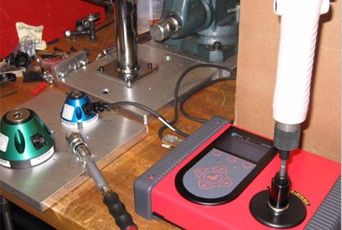
Regular torque tool calibration ensures repeatable accuracy and adherence to international standards. Torque calibration also guarantees the equipment is operating at peak performance and can highlight potential tooling problems before they arise due to tool wear or broken components.
Torque calibration equipment can be found in many departments within an organization such as:
Research & Development
As technology moves ever forward, with the implementation of new materials, processes and assembly techniques there is a demand for accurate torque application. The accurate calibration of torque tools is a vital part of this process.
Inspection & Quality Control
The accurate and repeatable application of torque is fundamental in any quality control process in order to save time and money. Torque equipment calibrated regularly and accurately can and will allow you to reach these goals.
Production
Torque tools calibrated correctly can provide repeatable accuracy saving time, money, materials and labor. Regularly calibrated and certified torque tools, reduce the risk of products failing in service, saving money from warranty and re-work costs.
Servicing
Engineers involved in servicing may have to apply various and accurate torque settings to a range of components. Accurate calibration of these tools is vital in achieving accurate torque applications.
Mountz Inc. Offers Two types of Torque Testers
Mechanical torque testers offer the user a low cost, robust and easy to use device, that's designed to set and calibrate most torque tools. These torque analyzers will provide many years of accurate and reliable service.
Electronic torque testers are highly accurate, reliable and easy to use. These torque analyzers can offer the user much more than torque calibration. The digital torque calibration equipment can allow the user to download test results, test hand and power tools, select different units of measurement and carry out calibration beyond the scope of mechanical calibration devices.
Measuring Torque in 3 Facets of the Assembly Process
Prior to Assembly
Torque testing equipment, like torque analyzers and torque sensors are used prior to the assembly process. The equipment is used for tool setup or conducting tool capability studies. For tool setup, the tool crib or lab will want to set the torque tool according the torque specification required for the application. For tool capability studies, technicians need to ensure that the torque tool can provide the necessary torque and repeatability that's required for a potential application.
The equipment used for this torque testing would be:
- Tabletop torque testers with built-in transducers
- Torque analyzer that connects with either stationary torque sensors or rotary torque sensors
- Joint simulators like run down adapters
During Assembly
For pneumatic and electric assembly tools that are being used in the production area, many manufacturers like to audit the tool and verify the actual torque being applied to the application or if the tool is starting to fall out of specification. The Rotary Torque Sensor is the ideal torque-auditing tool for testing the actual torque being applied on the assembly application. By connecting a rotary torque sensor between an electric or pneumatic tool and an assembly application, you can monitor the torque being applied from the tool to the fastener or bolt. This type of torque reading is called a dynamic torque reading. The rotary sensor is connected to the torque analyzer, which records and stores the data.
Manufactures also use this auditing process to validate the torque setting of the tool and the data collected during a capabilities study are in sync. Since each assembly application has a different joint rate and tolerances, the performance of the tool on the application may differ from the tool crib or lab results. Using a rotary sensor connected to a torque analyzer, technicians can see if there are any differences with the torque readings between the assembly area and the tool crib or lab. Then the technicians can make any necessary adjustments to the tool or the assembly process.
For hand tools like torque wrenches and hand torque screwdrivers, manufacturers might utilize a torque tester on the production floor and require their assemblers to verify the torque setting daily or weekly to ensure the tools aren't falling out of calibration. The torque tester will display a result that must be compared to the allowable tolerance of the torque tool. Some torque testers offer a tolerance-setting feature that provides a GO/NG result (RED or GREEN) when the torque tool is tested. If the verification result is OK then the torque tool is deemed in tolerance. If it is NG then calibration or adjustment of the torque tool is required.
After Assembly
As a final check, manufacturers may select to verify the torque after an assembly process, so they can verify adequate torque was delivered to the fastener and detect any missed or loose fasteners, or joint relaxation.
What is Residual Torque? It is the amount of tension that remains in a joint after fastening a threaded fastener. The best way to determine residual torque is by performing a "just move" test. Mountz offers two best practices solutions for measuring residual torque. A digital torque and angle wrench will display the torque applied after 3 degrees of movement, it will also show the final torque and angle applied.
An economical counterpart to the digital Wrench is the Mountz Dial Wrench. The dial wrench captures the finishing torque applied to a fastener with fine main and memory pointers.
The equipment used for conducting testing would be:
- Dial Wrenches and Dial Screwdrivers
- Screwdriver sensor mated with a torque analyzer
The failure of a three-cent fastener that isn't properly tightened can lead to catastrophic or latent failures. Fasteners that are insufficiently torqued can vibrate loose and excessive torque can strip threaded fasteners. Using a quality torque tester has become increasingly important for many companies to ensure that proper torque is being applied and maintains gauge requirements associated with the ISO 9001 Quality Standard.
Contact Us
Mountz has a team of application specialists ready to assist!
Featured Blog Posts
Related Posts

Focal Learning Center Heading
Lorem ipsum dolor sit amet, consectetur adipiscing elit, sed do eiusmod tempor incididunt ut labore et dolore magna aliqua. Ut enim ad minim veniam, quis nostrud exercitation ullamco laboris nisi ut aliquip ex ea commodo consequat. Duis aute irure dolor in reprehenderit in voluptate velit esse cillum dolore.
Call a Specialist
Overhead Crane Repair Services Rely on Pro Torque Tools
Lorem ipsum dolor sit amet, consectetur adipiscing elit. Duis aute irure dolor in reprehenderit in voluptate velit esse cillum dolore.
Chat with a Specialist