
Too Loose or Too Tight? 10 Steps to Torque Control
Synopsis
Details
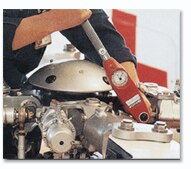
In the manufacturing and assembly world, tightening, controlling, or measuring torque on fasteners is imperative for production efficiency. An inadequately torqued fastener can vibrate or work loose; conversely, if the tension is too high, the fastener can snap or strip its threads. Faced with these problems, manufacturers are realizing that precise torque control can spell the difference between a safe, reliable, and economical product and complete disaster.
Anybody who has to tighten a threaded fastener and needs to control, monitor, or measure torque needs sophisticated torque tools," according to Brad Mountz, President/CEO of Mountz Inc. "Likewise, if OEMs want to save money, make their workplace safer, enhance product quality, or reduce their exposure to liability; only specialized high-quality torque tools will get the job done properly."
The following 10 tips for achieving precision torque control will give manufacturers vital information needed to streamline their production processes:
1. Determine Torque Requirements
When determining correct torque specifications, the engineer must consider the maximum load placed on the fastener, the strength of the material joined, and whether the joint is hard or soft. A hard joint connects materials directly. In this case, the fastener rotates very few degrees to develop full clamping force after it encounters the material. Since a soft joint contains a gasket or involves compressible materials, it requires additional tightening after the fastener makes contact, to achieve full clamping force.
One recognized method is to perform a destructive test with a calibrated torque control tool on the actual material and fastener to be joined. An evaluation is usually conducted with ten parts, ten fasteners, and a calibrated torque control tool with a transducer. First the fastener is tightened to the point of failure, then repeated several times to verify the consistency of the failure point. Now another series of tests is begun whereby the joint is torqued to 75% of the failure point. Depending on how the parts will be used, the tightening can be reduced by any degree necessary. If parts on a machine are subject to heavy vibration, maybe 85% of the total force is necessary for good torque control.
2. Pick the Right Torque Tool
A wide variety of tools are available to control and measure the torque applied to fasteners, from pneumatic screwdrivers and electric screwdrivers to large industrial torque wrenches, torque testers, torque sensors, and torque multipliers. These tools utilize calibrated torque setting mechanisms that may be factory pre-set or user-definable. When the specified setting is reached, the tool gives a visual, audible, or tactile signal.
The anticipated production output, the type of materials being joined, the amount of torque required and the specified fasteners determine the selection of tools for any given application. Lighter materials such as wood or plastic may require only lightweight tools; likewise, heavy materials such as steel may require stronger or larger tools. Tools should also have connection ports for an RS-232 PC cable if torque data must be gathered electronically.
3. Use Torque Testers
Effective use of a torque analyzer is a fast and reliable method of calibrating torque tools to their proper settings. Torque testers can also be used for quick tests on the line or in the lab to determine whether torque tools are holding a given setting. They also allow quality control inspectors to calibrate torque sensors and verify torque on fasteners.
"A quality torque analyzer should have enough memory to record several hundred readings, and it should store calibration data for multiple torque sensors," said Mountz.
Torque testing equipment can be used for torque wrench calibration and testing on hand screwdrivers, pneumatic screwdrivers, torque wrenches, electric screwdrivers, pulse tools, torque multipliers and other torque tools.
4. Cooperation is Necessary
Orchestrating a successful torque program requires extensive teamwork in all production related departments to assure consistent adherence to torque specifications. Production planners, supervisors, engineers, quality control technicians, and assemblers must all work together to efficiently control the process. To avoid problems, consult everyone whenever changes relating to the use or type of fasteners are instituted.
5. Employee Training
Professional torque tool suppliers often offer personnel training sessions and workshops. Topics to cover are basic torque theory, types of tools available, how to operate specific tools, preventive maintenance, safety concerns, and job-related ergonomics.
6. Employee Safety
Worker fatigue and potential injuries can be avoided with safety programs and high-quality tools. In critical applications where safety is an issue, the proper use of tools can decrease the incidence of expensive lawsuits and product recalls.
To avoid accidents, tools and the work area should be inspected regularly. Worn components should be replaced and unsafe conditions on the assembly line should be rectified before injuries occur. Reducing worker fatigue must also be considered towards achieving production line consistency and reducing repetitive motion injuries. Torque control tools are available which improve ergonomics and reduce the effort required for consistent tightening.
7. Establish a Calibration Program
Calibration is fine-tuning the torque control process in a production environment. Calibration should be checked periodically to determine whether torque tools are operating at their proper settings. Many tools don't have a locking device, and users may easily change their torque settings. When this happens, the tool falls out of adjustment.
A regularly scheduled calibration program enables quality control personnel to correct divergence from proper settings, whether it's because of normal tool slippage over time or because of adjustments to the tool. Begin by setting a calibration interval initially based on the severity of the application and the tool manufacturer's recommendations. If the applied torque values are out of range, cut the calibration interval in half and re-test the tools.
8. Preventive Maintenance
To maintain consistent accuracy, torque tools must be checked periodically for wear or defective parts. A properly structured preventive maintenance program optimizes tool performance and reduces unexpected downtime, thereby saving time and money in the long run.
Monitoring the number of cycles per day and total hours that a tool is used is the most accurate way to establish proper maintenance intervals. It is recommended that tools be serviced after 100,000 cycles, or if an inspection reveals old or dry grease, parts that show signs of excessive wear, or loose screws or bolts.
9. Torque Control Increases Quality Control
The precise control of torque is a key to quality assembly and can ensure that products perform as expected. In many cases, companies spend a great deal of time and money for disposal or repair of damaged parts during assembly, the result of improper torquing. Worse yet, even if these products make it to market, manufacturers are faced with customer dissatisfaction if they fall apart due to loose screws or stripped threads.
10. Increase the Return On Investment
Tool suppliers should offer recommendations and answers to manufacturers' torque control challenges. Will their tools enable assemblers to build quicker and with less wasted motion? Will they give quality control inspectors more time to check parts thoroughly? Will they reduce errors in the assembly process? And, will they save money and time for the company overall?
Contact Us
Mountz has a team of application specialists ready to assist!
Featured Blog Posts
Related Posts

Focal Learning Center Heading
Lorem ipsum dolor sit amet, consectetur adipiscing elit, sed do eiusmod tempor incididunt ut labore et dolore magna aliqua. Ut enim ad minim veniam, quis nostrud exercitation ullamco laboris nisi ut aliquip ex ea commodo consequat. Duis aute irure dolor in reprehenderit in voluptate velit esse cillum dolore.
Call a Specialist
Overhead Crane Repair Services Rely on Pro Torque Tools
Lorem ipsum dolor sit amet, consectetur adipiscing elit. Duis aute irure dolor in reprehenderit in voluptate velit esse cillum dolore.
Chat with a Specialist