
Pulse Tool Selection Best Practice: Focus on Ergonomics, Productivity and Low Maintenance Cost
Synopsis
Details
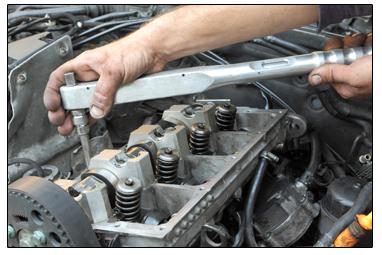
A Pulse tool has the speed of an impact wrench with nearly the repeatability of a clutch based shut-off tool. Containing precision-machined parts the pulse unit is a sealed chamber that is filled with a formulated hydraulic fluid. Pulse blades with a custom designed precision roller push the fluid inside the rotating chamber generating hydraulic pressure that produces torque. Air power is the power source that spins the anvil and resistance against the fastener causes the pulse unit to activate.
Pulse tools are designed for safe, reaction free operation for various industrial assembly applications. Durability, power, speed, low noise decibels, minimal vibration and low torque reaction are key reasons for selecting a safe ergonomic pulse tool. For fastening applications, a pulse tool will increase productivity, provide excellent ergonomics, reliability and quality.
Productivity
Rugged Pulse tools increase productivity and enhance product quality through precision torque control and user comfort. A lightweight pulse tool with more torque capability is an ideal tool for an operator. A pulse tool with a good power-to-weight ratio will enhance the cycle time for the operator with a high-speed rundown. The Flex Power Pulse tools, by Mountz Inc., feature a double chamber motor that allows the tool to quickly reach the required torque and increase productivity. The roller inside the pulse unit reduces friction, which increases power and allows the "pulse fluid" to last longer.
The Flex Power pulse tool features a unique "block valve" design to control the flow of oil and keep it on the designated path. The block valve improves the shut-off timing of the tool for better repeatability and reduced wear on the springs.
Other pulse tools have a shut-off mechanism that operates by the movement of steel ball and spring. For these pulse tools, the pressure inside the pulse unit could cause the spring to wear down quickly, which would impact the accuracy of the torque output and increase maintenance costs as well as downtime.
Ergonomics
The fluid inside the Pulse tool acts as a shock absorber providing a powerful reactionless and vibration free nutrunner that is low in noise and highly ergonomic. A Pulse tool is crafted for a quick run down time, which reduces the operator exposure. Mountz FlexPower Pulse tools are ergonomically safer than harmful hammering and vibration of impact wrenches.
Durability
Due to the design of a pulse tool, there is no mechanical clutch or the conventional metal-to-metal hammering mechanism like an impact wrench that causes a short tool life and higher maintenance costs. Pulse tools are designed for durability and a long tool life.
Built for durability with a superior X-ring design and specially designed pulse fluid, the FlexPower pulse tool extends the life between regular oil changes and provides more torque stability than competing brands. The FlexPower X-ring design allows the seal to cover two points simultaneously where leakage usually takes place in other standard pulse tools. This "double sealing" feature of the FlexPower pulse tool extends life between regular oil changes.


The accumulator design of the FlexPower pulse tool is a space within pulse unit that allows the pulse fluid oil to expand so it does not heat up too quickly. This design improves torque stability as well as reduce time between oil changes.
The rear motor plate of FlexPower pulse tool is crafted with heat-treated steel that reduces friction, which enhances tool motor durability. Other pulse tools feature an aluminum motor plate design, which allows for increased friction between rear plate and rotor during tool operation. This design can decrease the life cycle of the pulse tool.
Quality
Pulse tools deliver precision torque control and repeadiv clamp force on properly designed joints. It is important to understand your joint application before a selecting a pulse tool.
These general guidelines are to help identify potential pitfalls relating to the tightening of bolted joints.
HARD JOINT APPLICATIONS
- Auto shut-off pulse tools typically reach 85% of the maximum torque listed within torque range of the tool
- Non shut-off pulse tools typically reach 95% of the maximum torque listed within torque range of the tool
SOFT JOINT APPLICATIONS
- Auto shut-off pulse tools typically reach 70% of the maximum torque listed within torque range of the tool
- Non shut-off pulse tools typically reach 90% of the maximum torque listed within torque range of the tool
FlexPower Pulse Tools
Mountz pneumatic pulse tools are designed to improve the quality of manufacturer's product and reputation. The FlexPower pulse tools reduce liability and costs, while enhancing production and make working conditions safer for operators. Controlling torque is quintessential for companies to ensure their product's quality, safety and reliability isn't compromised. The failure of a five-cent bolt that isn't properly tightened can lead to catastrophic or latent failures. Fasteners that are insufficiently torqued can vibrate loose and excessive torque can strip threaded fasteners. Using a quality torque tool has become increasingly important for many companies to ensure that proper torque is being applied and maintains gauge requirements associated with the ISO 9001 Quality Standard.
Contact Us
Mountz has a team of application specialists ready to assist!
Featured Blog Posts
Related Posts

Focal Learning Center Heading
Lorem ipsum dolor sit amet, consectetur adipiscing elit, sed do eiusmod tempor incididunt ut labore et dolore magna aliqua. Ut enim ad minim veniam, quis nostrud exercitation ullamco laboris nisi ut aliquip ex ea commodo consequat. Duis aute irure dolor in reprehenderit in voluptate velit esse cillum dolore.
Call a Specialist
Overhead Crane Repair Services Rely on Pro Torque Tools
Lorem ipsum dolor sit amet, consectetur adipiscing elit. Duis aute irure dolor in reprehenderit in voluptate velit esse cillum dolore.
Chat with a Specialist